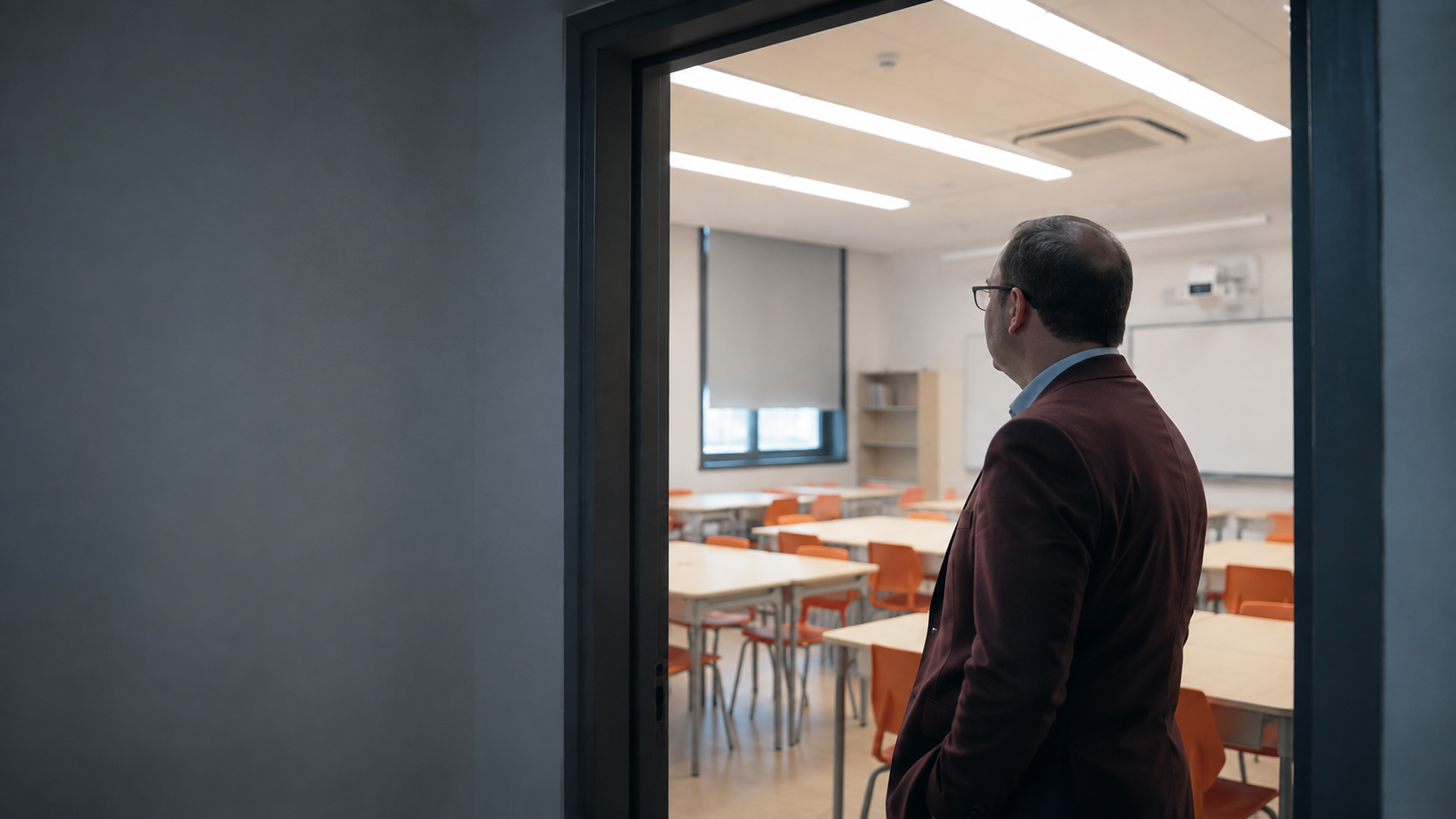
I left teaching once.
I Came Back different.

Joshua Pickart
Deputy Head of The History Department
IB & AP Classroom Teacher
I’ve spent eleven years teaching AP & IB History and Theory of Knowledge, while also growing into teacher mentorship, curriculum development, department leadership, and now AI policy. What began as a classroom teaching role has steadily grown into something broader: teaching students, developing educators, and helping shape the systems and culture around both.
How I Got Into Teaching
Honestly, at the start, teaching wasn’t necessarily what I was drawn to, music and coaching were. I wanted to direct choirs and coach sports, and growing up in smaller Lutheran schools, I believed staying in that system would give me the space to pursue both. I majored in Education with an emphasis in Social Studies and Music, picked up coaching credentials along the way, and got to work.
I started a summer choir at my church, and completed my high school student teaching by directing choir and teaching music courses. Then, during five years teaching at the primary and middle school level, I served as the coordinator and director of major concerts, including the Christmas program.
Ironically, the music and coaching roles eventually faded. Teaching itself is what stayed.
Two Turning Points
The first began in exhaustion and emerged in renewal
It was my fifth year teaching every subject in a self-contained Title I classroom in Milwaukee, and I was empty. It wasn’t quite disillusionment with teaching, but a total depletion that I needed to take seriously. I resigned after that fifth year and took a lighter teaching assistant role to give myself space to pray, examine where I was, and recharge. Eventually, I realized primary and middle school weren’t the best fit for me. High school, which had always been my dream, was calling, but there were no openings.
After finishing that year as an assistant, I briefly left education altogether for a summer in corporate sales. I hated every minute of it. Then, at 2 a.m. one night in early August, during one of the lowest points in my life, I found a Craigslist listing for a math, science, and religion position at a small Christian high school. I wasn’t a math or science teacher, but I figured methodology transfers, and I could learn the content. I wrote my application that night and had an interview request by 9 a.m.
During the interview, it turned out their actual need was for a Social Studies teacher, because their current teacher’s expertise was in math and science. At the principal’s suggestion, we swapped roles, and I became their sole Social Studies teacher.
That one sleepless night—born out of burnout, disoriented longing, and a lot of faith—is the reason I ended up teaching high school at all. It also opened the door to Shanghai, where I’ve now spent the last 11 years.

The second came from going deeper, not simply teaching longer.
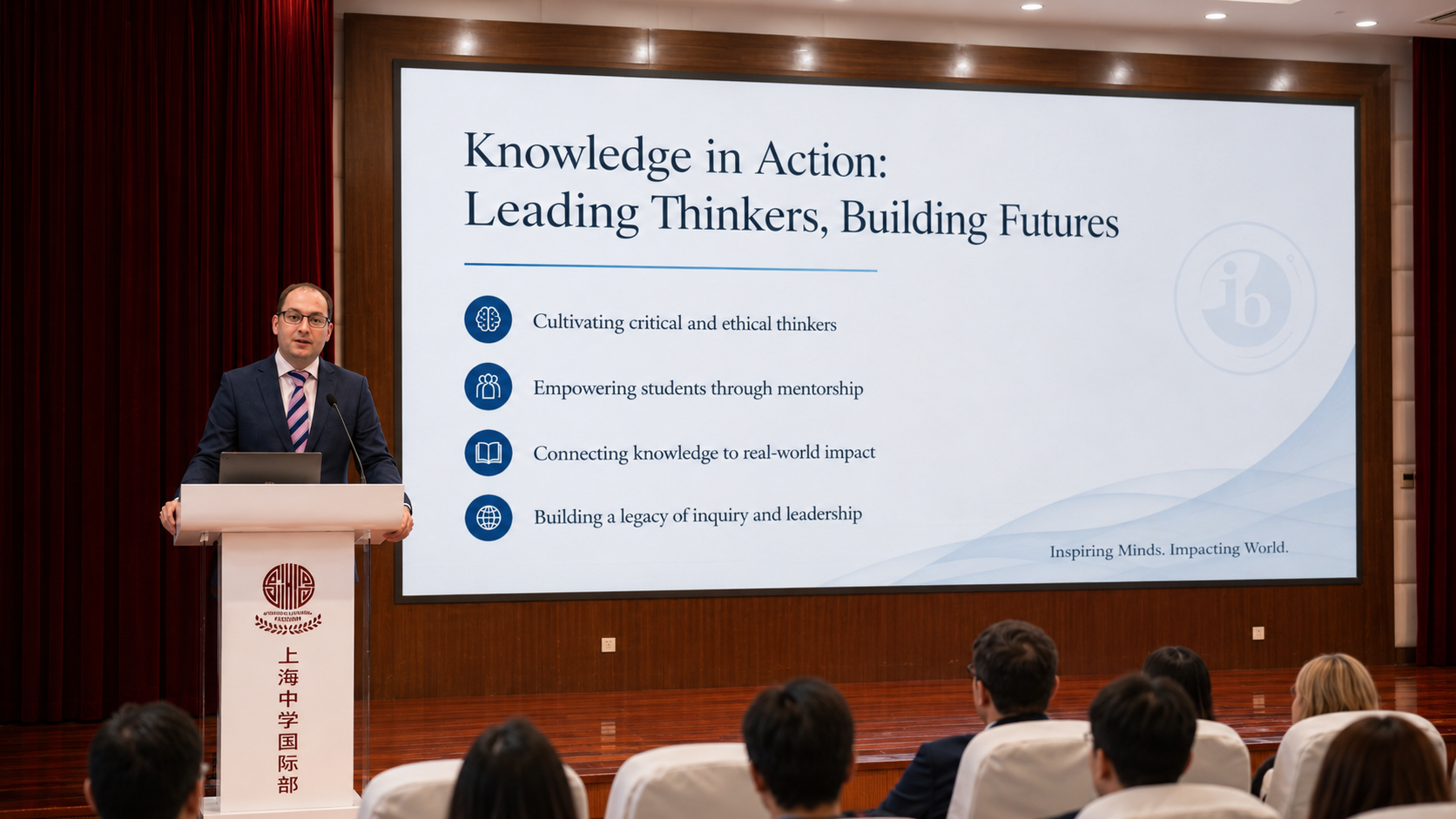
In 2021, I began teaching IB History and Theory of Knowledge while also stepping into the role of Deputy Head of the History Department. Taking on those roles in the same year became a launchpad for exploring aspects of myself and what I could contribute that I hadn’t fully considered before.
IB and TOK introduced me to a level of academic rigor I hadn’t experienced in my own high school education—the kind of depth I later recognized in how elite university programs approach a subject. It reshaped how I taught, placing greater emphasis on complex critical thinking, synthesis, argumentation, and questions about how knowledge itself is built. I’ve since received feedback from colleagues from countries like Ireland and the U.S. that my Grade 11 and 12 students are doing work they didn’t encounter until their second year of university.
At the same time, stepping into department leadership cracked open a door I had long dreamed about but had not previously been available to me. It took time to grow into the role, but the more I observed, listened, and had younger teachers seek me out for guidance, the more I realized my educational responsibility wasn’t limited to my own classroom.
Those first years in these new roles taught me that it wasn’t enough to become a great teacher in my own right. I wanted to become an impactful educator. That realization pushed me to pursue my Master’s in Education and expanded my focus to include curriculum design, teacher mentorship, and the culture of a department or school itself.
The future of individuals, communities, and cultures depends in part on educational spaces that empower people to flourish. I came to understand that creating those spaces requires more than strong teachers; it also requires leaders who know how to build and sustain that kind of culture.
How My Philosophy Developed
I’ve always leaned into the relational aspects of teaching, even early on, but for most of my years teaching in the U.S., my focus was constantly pulled toward content and subject mastery. My understanding of student success, and of what made a good teacher, centered on knowing your material, teaching it well, and producing quantifiable student outcomes. That wasn’t wrong, but it was incomplete.
There were many influences in my philosophical development, but of all the core stars, two shine bright.
The first has been my wife. Through our journey together, she has patiently helped shape and refine what was already there, but underdeveloped and often hidden. She’s taught me, more than anyone, what it means to be strong and vulnerable at the same time, and to see people rather than simply interact with them. She taught me the importance of being precise, of speaking with clarity, and of looking for the depth and meaning that often exist beyond the mainstream or immediately visible.
The second came through the process of attaining my Master’s in Education. One lesson that stayed with me came from a pastor’s story about community outreach. Traditional approaches kept failing him until he changed the question. Instead of asking what people needed or how the church could help, he began asking what they were good at, what they enjoyed, and where they already had ability.
In one visit, he found that a family was not only eager to talk about their own skills and interests, but also quick to praise what others in their family and wider community could do. The mother, it turned out, was a phenomenal cook who had always dreamed of starting a business but lacked the resources and know-how. He began to realize that his role was not simply to provide help, but to engage people through what was already present and empower them to build from there. For the mother, this meant connecting her with church members who could help bridge the gaps. She learned the business side, gained access to the resources she was missing, and eventually built the restaurant she had always dreamed of—developing what was already true about her.
That story reframed something for me. It’s not so different from what a mentor, or a teacher, should actually be doing: seeing what someone already carries, asking the right questions, and building the bridge to what they need next.
That thinking took deeper root as I became an IB teacher and stepped into department leadership, all within that same stretch of my professional life. My philosophy and approach are still developing, but they are far more certain now than they were when I left the U.S. in 2015.
At the center of it is a simple conviction: people first, then content and skill. Not because content and skill don’t matter—they matter deeply—but because people rarely reach their potential without first being seen, understood, and genuinely cared for.
For me, teaching and leadership begin there. It means knowing the people in front of me well enough to understand their strengths, interests, concerns, questions, and potential. It means creating an environment in which they can take risks, grow, and become more fully capable of what is already possible within them. And this applies just as much to colleagues as it does to students.
High expectations in education are essential, but they are most powerful when built on relationship, trust, and the understanding that the person in front of me is worth knowing.


Where I am Now
Eleven years at my school in Shanghai, and I’m still here for the same reason I stayed: there has always been more room to grow, and more I felt I could give.
What started as a classroom teaching role has steadily expanded. I now teach IB History and Theory of Knowledge, serve as Deputy Head of the History Department, and work as an instructional mentor and coach for colleagues across the school. This fall, I’m also working more closely in helping shape how our classrooms navigate one of the most consequential shifts in education right now: the use of AI.
Somewhere along the way, I also became a curriculum builder and co-author of our high school’s mentorship program. None of that came from setting out to collect titles. Each new responsibility simply revealed another way I could invest in the people and systems around me, not just the students in my own classroom.
I completed my Master’s in Education a few years into this stretch, which gave language and structure to instincts I had already been acting on. These days, my work sits at the intersection of three things I care about most: teaching history and critical thinking with depth and rigor, building curriculum that outlasts any one classroom, and helping other teachers find their own footing and confidence.
Shanghai has become home in a way I never expected when I arrived. What has kept me here is not simply opportunity, but the continued sense that there is still meaningful work for me to do.
What’s yet to unfold
Twenty years in, I still feel much of the same energy I had at graduation — not because I’m looking past where I am, but because there always seems to be another layer worth exploring. I’ve built curriculum, mentored colleagues, and helped shape a department, and I’m not done.
Now that work is expanding into questions about how AI should be used in education, new forms of teacher support, and more creative ways to help students navigate their own learning. I don’t know exactly what the next chapter will look like, but the question underneath it has remained remarkably consistent: who is in front of me, what is already there, and how can I help it grow?